



Śrīharṣa on Knowledge and Justification – 3
Nāgārjuna and Śrīharṣa on Dialectical Closure If philosophical debate is a game, it is not free from manipulation. The parties involved do not come with just their positions but also with the rules that can More...

Śrīharṣa on Knowledge and Justification – 2
Śrīharṣa on the Scope of Reasoning With regard to the establishment of categories, a generally agreed-upon maxim is that ‘validity of something can be established [P1] not by a mere proposition but by [P2a] More...

Śrīharṣa on Knowledge and Justification – 1
In this paper I explore the extent to which the dialectical approach of Śrīharṣa can be identified as skeptical, and whether or how his approach resembles that of the first century Mādhyamika philosopher Nāgārjuna. More...

The Dialogical Manifestation of Reality in Agamas – 2
[contextly_sidebar id=”aA33PHAQVOQdpQ9cDuOzNbVl873nOeZR”] Śruti in Trika Śaiva literature21 Abhinava on Āgamic revelation The status of Āgamic revelation in the Trika system is summed up in a single More...

The Dialogical Manifestation of Reality in Agamas – 1
Tantric āgamas, considered to be divine revelation, are in dialogical format. In their monistic philosophy, Abhinavagupta and Kṣemarāja exploit this unique aspect of Āgamas and apply it to address the nature More...

The Concept of Ābhāsa in the Yogavāsiṣṭha – 3
[contextly_sidebar id=”qiROLwtmhx7sIICV7YUl9hZDoAGwoWlQ”] Abhāsa as Pure Consciousness The above description establishes that, depending upon the context, the concept of ābhāsa confirms subjective More...

The Concept of Ābhāsa in the Yogavāsiṣṭha – 2
[contextly_sidebar id=”UlyKsjwAFnnGUQk9DQrBro0r0eLhljI5″] Ābhāsa in the Mokṣopāyaśāstra/Yogavāsiṣṭha[1] The illusory nature of ābhāsa is consistently found in both Buddhist sources and More...

The Concept of Ābhāsa in the Yogavāsiṣṭha – 1
Studying classical Indian philosophy poses multiple challenges. One of them is the shift in the meaning of terms at different times, and another is the application of the same term with a different intent in different More...
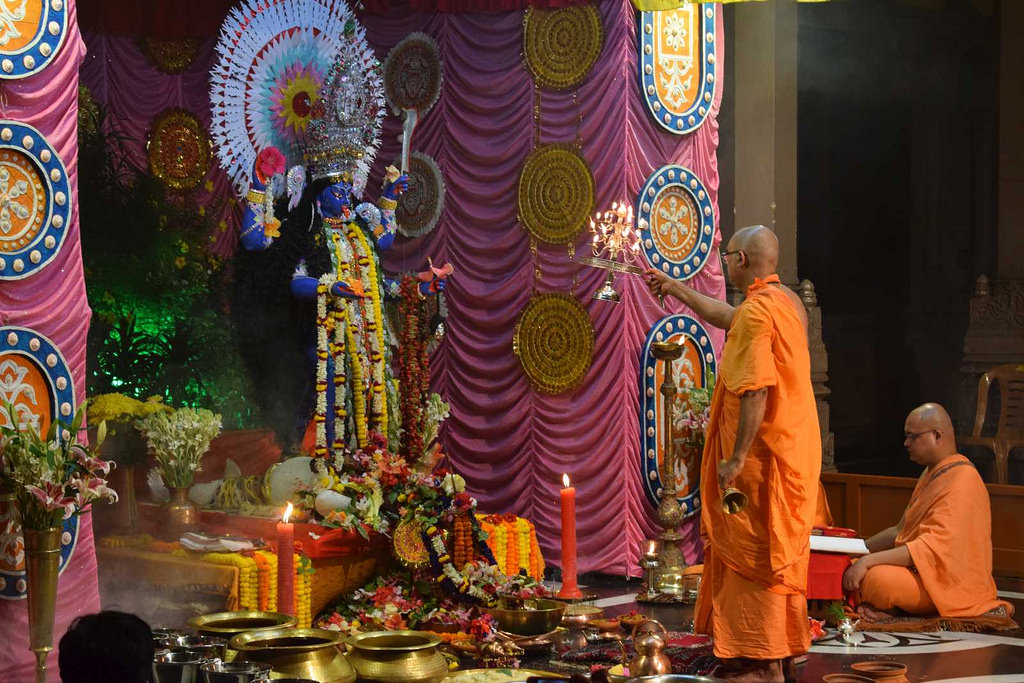
The Monistic Śākta Philosophy in the Guhyopaniṣad
Overview Studies on the pantheon of Kālī have either focused on autochthonous rituals and practices, or have read the canonized Tantric texts in relation to the Kashmiri traditions. In these readings, what has More...

A Cognitive Approach to Tantric Language – 3
[contextly_sidebar id=”a0wajEgf09OxDMzXsp11CCbH9UiiOKiI”] In the previous two parts, the author argued that reading Tantric literature by applying cognitive theories has a meaningful role to play. He More...